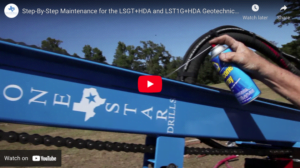
Proper maintenance isn’t just a suggestion — it’s the secret to dodging unexpected downtime. Our engineers design soil sampling drill rigs for easy maintenance, making the process as painless as possible. We’ve created a complete guide to taking care of your geotechnical soil sampling drill. Here’s an overview, including some extra tips for tracked rigs:
1. Engine Oil
Check the oil level daily before using the drill. If the oil level is near or below the lower limit mark on the dipstick, fill with the recommended oil to the upper limit mark. Be careful not to overfill.

2. Gear Drive Oil
Weekly or every 50 hours, check the gear drive oil levels and clarity. To do so, align the plugs horizontally, pull them out, and make sure the oil is filled up to the plug hole. To replace or add oil, use SAE 85W or SAE 85W 90. Once filled, replace the plugs and tighten them. Make sure to complete the first oil change after 50 hours of use. After that, change out oil once a year or every 1,000 hours.
3. Air Filter
The air filter should be checked every eight hours or sooner in dusty conditions. If the filter appears dirty or clogged, clean or replace it.
4. Filter Element
Replace the filter element every 500 hours. To do so, remove the cap with a wrench and pull the filter element out of the basket. If it looks dirty, you can clean it with a rag. Then, you can either replace the filter element or put in a new one. Screw the lid down by hand until it’s tight enough for the seal ring to seal, then finish tightening it with a wrench.
5. Power Unit Fan
If the power unit’s fan stops working, check to see if the fuse is blown. Replace the fuse if necessary. The 30-amp fuse is located on the starter side of the engine and easily replaced.
6. Hydraulic Oil Level
Use the sight gauge to track the hydraulic oil level on your geotechnical drill. Try to keep the fluid at halfway or above to ensure that there is enough hydraulic oil to keep the pump running.
7. Low Friction Pads
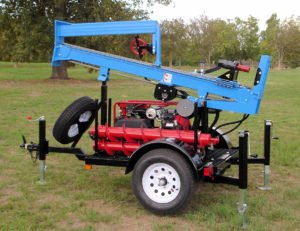
The mast plate doesn’t need lubrication. Instead, it has low friction pads that wear down before the plate does. To keep the wear pads current, replace them yearly or every 1,000 hours. To prolong their wear life, it’s important to keep the mast clean and free of dirt and debris so the mast head can slide up and down freely.
8. The Drill Mast
Grease the bolts on the mast daily or after every 8 hours of use. Make sure to lubricate the roller chain with a heavyweight oil or grease as well.
9. Drive Chain Tension
Check the tension of the drive chain every four to eight hours. To tighten the drive chain, first raise the mast and remove the pin and pivot the head out of the way. Next, loosen the bottom nut and tighten the top nut to pull the chain tight. Once the chain is tight, retighten the bottom nut to hold it in position.
10. Tracks (LSGT+HDA Only)
Tracks require regular maintenance just like any other part of the LSGT+HDA geotechnical drill. Grease the fittings daily. If the tracks sag, you can measure the distance between the bottom of the center roller, which should be 1.7 inches (43 millimeters). To adjust, use a wrench to loosen the bolts and remove the grease fitting cover. If there’s not enough sag on the track, allow grease to come out and relieve pressure to increase sagging. If there’s too much sag, add grease using a handheld grease gun.
A Little Maintenance Goes a Long Way
Routine care helps your geotechnical drilling project stay on track. By keeping up with your drill’s regular maintenance needs, you can extend its lifespan and avoid unexpected downtime. Whether you’re out in the field every day or only working with your rig occasionally, these maintenance steps will keep your equipment reliable, efficient and one step ahead of unexpected downtime. Learn more about geotechnical drill maintenance by checking the product manual or our maintenance video.