
Water Well Drills
Drill Down to Quality
Choosing a water well drilling rig requires careful consideration before signing on the dotted line. While price is the most common consideration for many people, there are quite a few other aspects to consider — some of which may outweigh the influence of price. When you choose Lone Star Drills you get much more than just a drill. With the purchase of any of our drills, we are committed to delivering value through quality, technical support and training.
- Quality: Don’t cut corners on materials and components if you want a drill that will perform well and last over time.
- Service & Support: Service is just as important as the product itself, so don’t skimp on the partner you choose.
- Training: Proper training is essential to the success of your operation, so work with a manufacturer who offers a safety and operational overview.
Downloads
Products
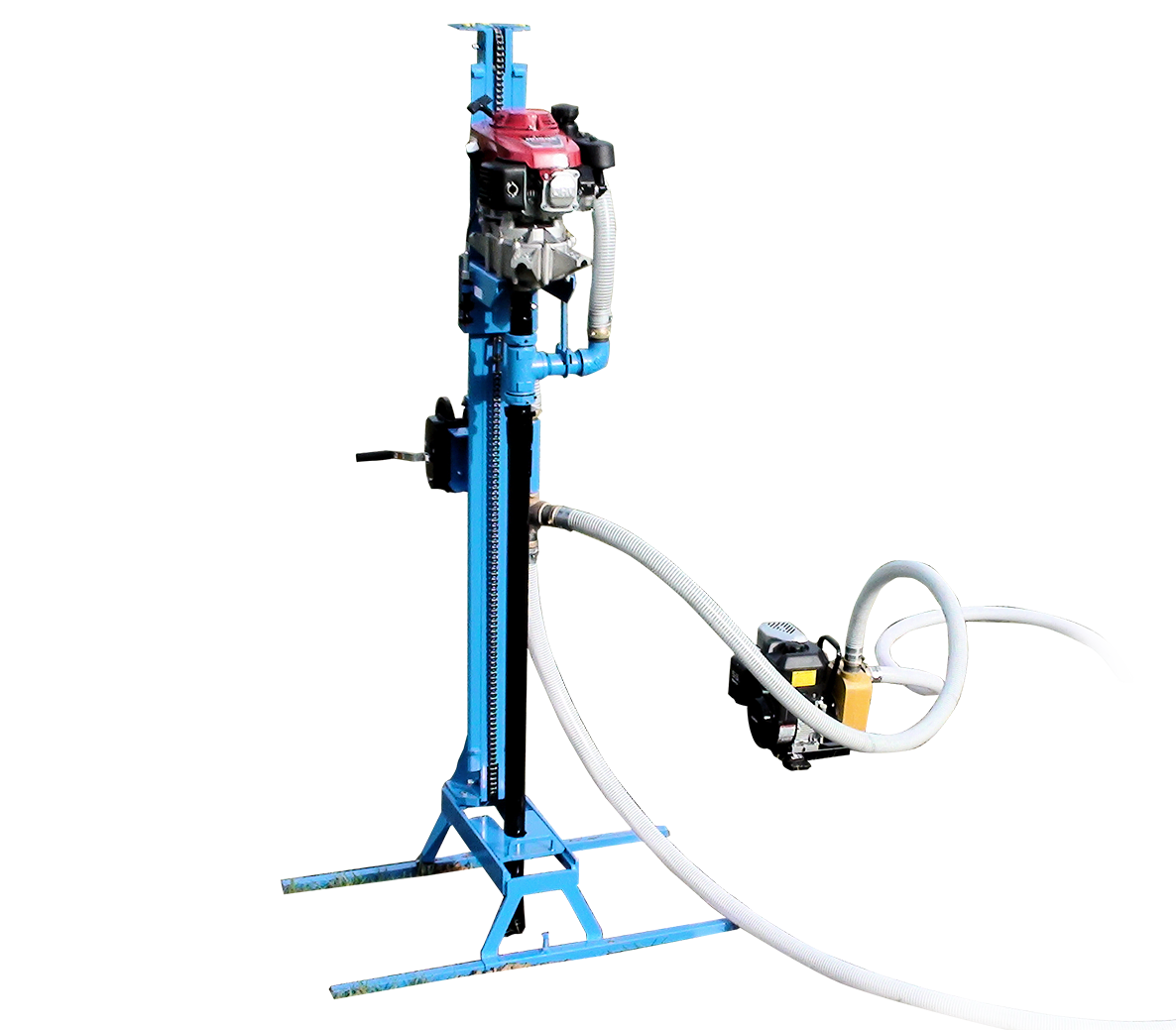
Mechanical Series Water Well Drills
Economically priced, highly portable, field-proven mid-range drills can reliably drill a 6-inch borehole from 100 to 200 feet in a variety of soil types.
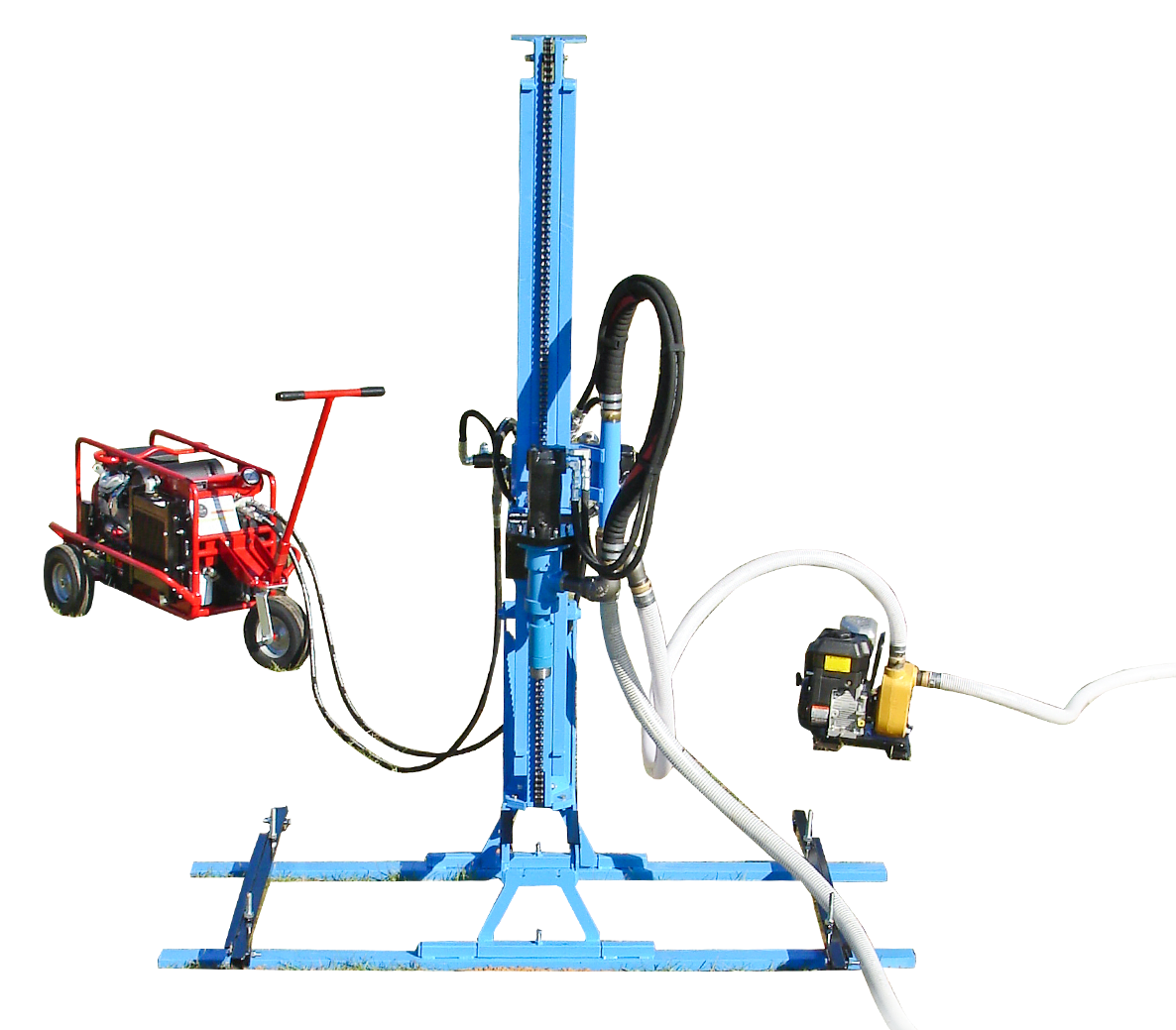
Hydraulic Series Water Well Drills
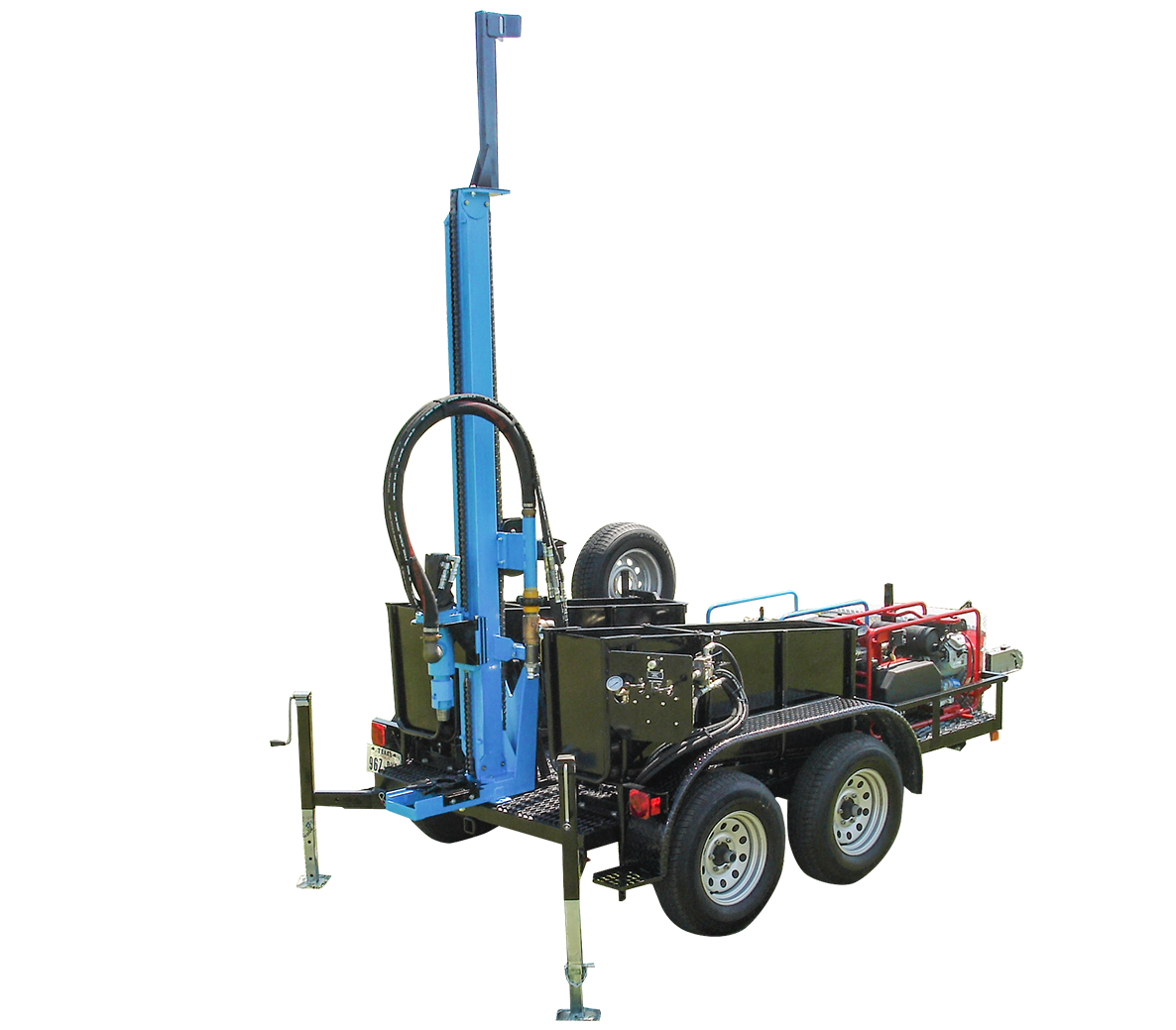
Trailer-Mounted Water Well Drills
Water Well Drilling FAQs
How do I choose between mechanical, hydraulic and trailer-mounted water well drills?
Consider your drilling conditions and transportation needs. Generally, the larger the drill, the more power it will have to get through tough material and the greater depth you’ll be able to achieve. Here’s an overview of when to choose different Lone Star Drills water well drills:
- Mechanical water well drills: The smallest in the Lone Star Drills line, these models drill down to 200 feet in sandy and clay soils. They are ultra-compact, portable and ideal for carrying into remote drilling sites or transporting in the back of a small truck.
- Hydraulic water well drills: These drills provide expanded power and drilling depth, capable of reaching down to 300 feet in sand, clay and rock. Like our mechanical drills, they break down for easy transport.
- Trailer-mounted water well drills: These are the most powerful water well drill rigs in the Lone Star Drills line. They use hydraulic power to produce additional force and some models can drill down to 400 feet in a variety of soil and rock conditions. They are mounted on heavy-duty, lightweight trailers that can be towed with a small truck or ATV.
Should I choose a gas or diesel engine for rural or international water well drilling?
The answer depends on your power needs, maintenance discipline and jobsite factors including availability and convenience. Here are some considerations when choosing between gas vs. diesel for your water well drill:
- Power: Diesel is often preferred for increased torque, but many manufacturers increase the horsepower in gas engines to account for the difference.
- Availability and Cost: Look into whether gas or diesel is the primary fuel in the area. The answer will impact fuel availability and cost at the drilling location.
- Convenience: What type of fuel does other equipment on the jobsite use? Consistency across machines increases convenience.
- Maintenance: Diesel units tend to be more sensitive to dirt and debris and can be harder to keep running. Gas engines are more forgiving.
How deep can compact water well drills realistically drill in sand, clay, gravel or rock?
Lone Star Drills offers a range of compact water well drills with the smallest, the LS100, capable of drilling down to 100 feet in sandy and clay soils, and the largest, the LS400T+, able to reach down to 400 feet in sand, clay and soft and hard rock formations. When encountering hard rock such as quartzite, limestone, sandstone, granite or basalt, we recommend pairing one of our hydraulic water well drills with a down-the-hole (DTH) hammer to power through these formations down to 300 feet. Learn more about how to maximize productivity in tough rock formations in our blog.
What should be included in a complete water well drilling package before starting a remote job?
Lone Star Drills water well drills include required components such as the engine, mud pump, mud hoses and drill pipe as well as bits, reamers, a toolbox and spare parts. Depending on the drill, it may also include additional components, such as a winch, swivel, casing flush tool, bailer, rope and anchor kit. We also offer water well drill kits — also known as Missionary Kits — with basic necessities including a casing flush tool, casing slips, hollow braid rope, hoist bracket bailer tripod assemblies, a PVC bailer, hard hats, pipe joint compound, a grease gun, wrenches and miscellaneous nuts and bolts. Take a look at our water well drilling accessories to support your remote project.
How do Lone Star Drills compact water well drills support missionary and international clean water projects?
Lone Star Drills was founded with a mission to develop water well drills that meet portability and operational challenges that come with drilling in underdeveloped countries. Our drills are tough, tried and tested, with the power and portability to stand up to rugged demands in remote locations. Volunteer and mission organizations are putting Lone Star water well drills to work in more than 40 countries across the globe to bring clean water where it’s needed most. Hear more from our president, Joe Haynes, in this video.
What support, training and replacement parts are available after purchasing a water well drill?
At Lone Star Drills, we offer a half-day training session to familiarize you with your equipment and learn how to properly use it. Additional training is available through partner organizations and operational videos. You can see the full details about water well drill training on our website. We also offer access to ongoing support and replacement parts for your water well drilling equipment. Contact us to learn more about total support for your Lone Star Drills water well drill.
Related Articles
-
Know Your Tool, Fulfill Your Mission
Maximize your efficiency and productivity with the five-part, how-to video series on Little Beaver LST1+ drill operation. These informative videos ...
-
Bringing Water to Developing Countries
Clean drinking water is critical to human life. A lack of clean water can cause a host of problems; and yet, according to the United Nations, 2.2 b...
-
All’s Well That Ends Well
Brothers Find True Riches in Helping Central American Villagers Millions of times a day throughout developed countries, people fill glasses from th...
-
Drilling Solutions to Meet Your Mission
As simple as it may sound to put a hole in the ground, water well drilling is a complex process that demands much more than just a drill to be done...
-
Seeing the World Clearly
Lifewater Canada Brings Clean Water to Numerous Villagers Jim Gehrels, founder of Lifewater Canada, is legally blind, but he has a clear vision for...
-
Take it to the Team
The Basic Members for Drilling Missions Many say the hardest part of a drilling mission is getting started and selecting the right crew. That’s why...